Grade Leveling:
We Didn’t Always Agree. That Was the Point.
📋The Overview
This project started at a conference that didn’t quite fit my team. The idea was to build curriculum together. We couldn’t. So I found something we could build together instead.
As Math Supervisor at an online charter school, I led a team of teachers who each owned their own courses. We couldn’t share curriculum, but we could share how we graded it.
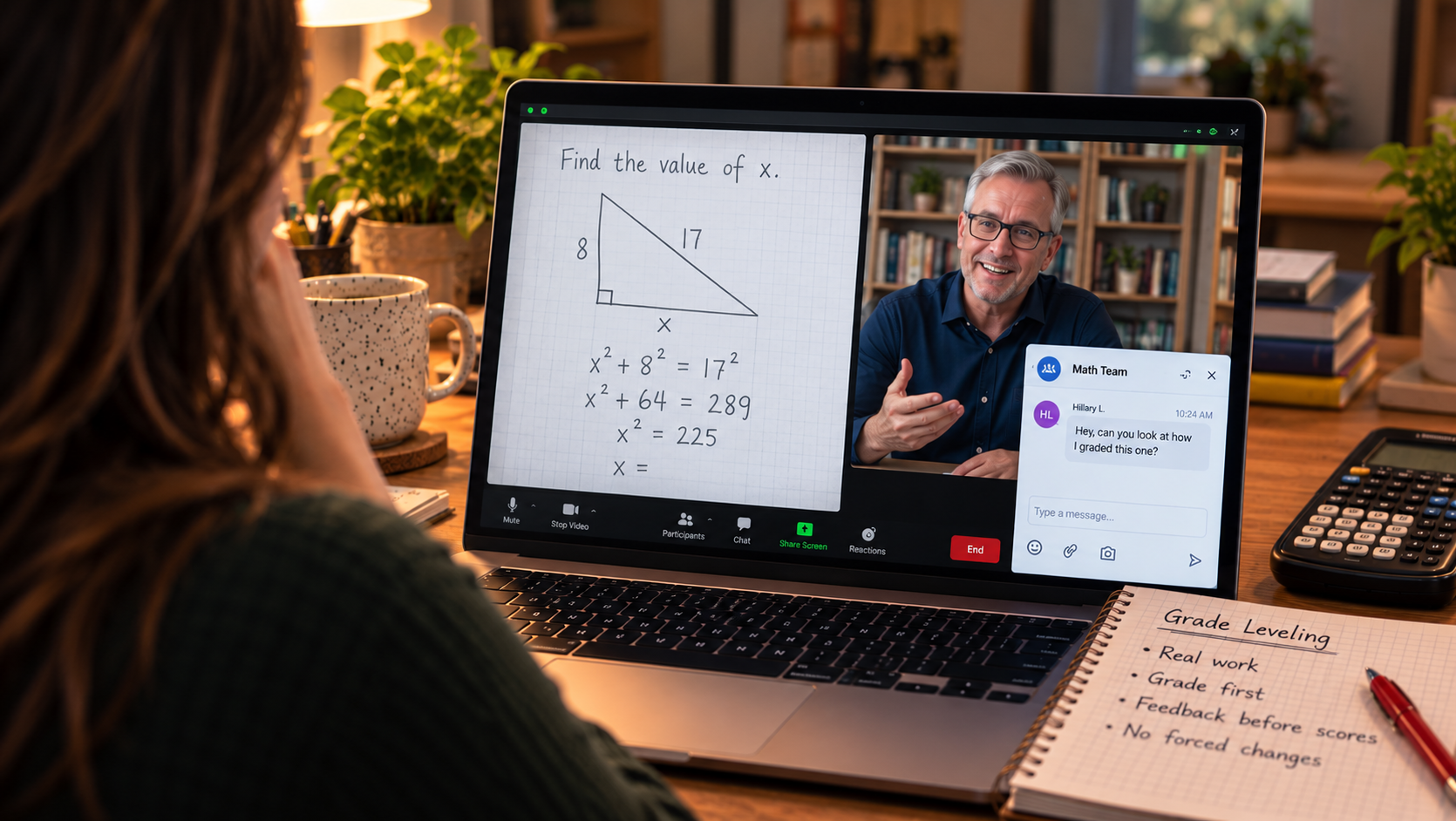
Every other week, we graded the same real student work, compared our scores, and talked through the differences. We didn’t always agree, and that was the point. Over time, scores got closer, teachers started leaning on each other, and a group of mostly remote teachers became a team.
⚡Quick Facts
Role: Math Supervisor, grades 6 to 12
Organization: Nevada Connections Academy, online charter school
Team: About 7 math teachers, most of them remote
Timeline: Every other week as needed, sustained for the rest of my time at the school
Tools Used: Screenshots of student work, virtual meetings, team group chat
Outcome: Scores on complex problems narrowed from a 5-point spread to within about 2 points; recognized by leadership as a strong, collaborative team
Skills:


🔍The Problem
Every math course had one teacher. One geometry teacher. One 7th grade teacher. Each of them graded alone.
That meant the same answer could earn very different scores depending on the course. Students and families notice that, and in the past, a reputation for harsh grading had traveled fast.
There was also no easy way for teachers to help each other. If someone got sick or fell behind, no one else was confident grading their students’ work the way they would.
The problem wasn’t the teachers. It was that every one of them was grading on an island.
📊The Research
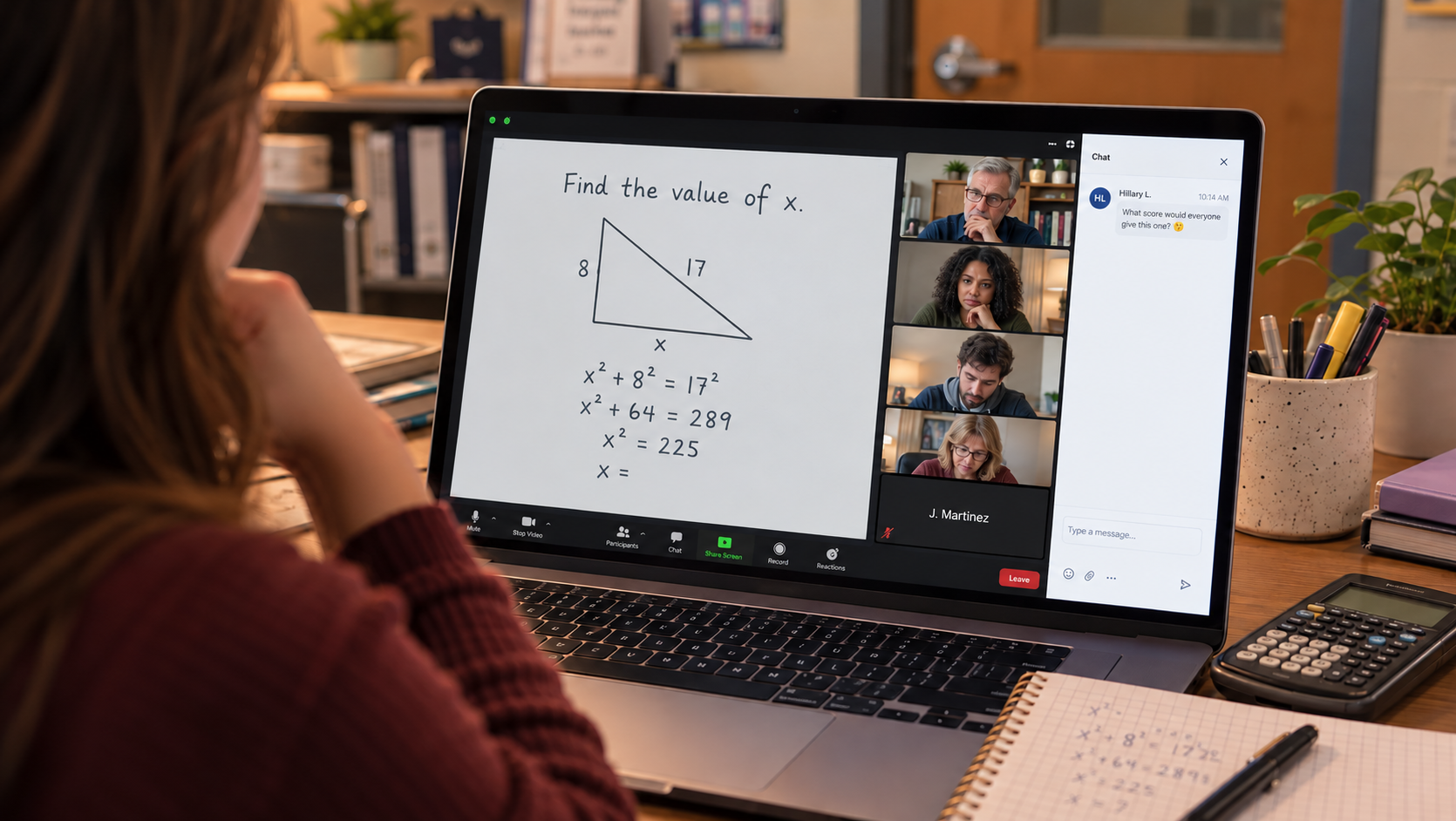
The idea started at a professional learning communities (PLC) conference with the school’s leadership team. Much of it focused on teachers building curriculum together.
That didn’t fit us. Our curriculum was provided, and most courses had a single teacher. There was nothing to co-create.
But the core idea still applied: teachers get better when they look at the work together. Grading was the one thing every teacher on my team did, every day, alone. That’s where we could come together.
🔀The Options
I needed a way to bring a mostly remote team together around something real. There were a few ways to approach it:
Leave grading to each teacher. The status quo. Simple, but inconsistent for students, and no one could step in for anyone else.
Create a common rubric. Some problems already had partial rubrics, but a document wouldn’t change how people thought about grading. It could also feel like putting teachers under a magnifying glass.
Grade real student work together. Slower, but it would build shared judgment and a stronger team at the same time.
I chose to grade together. The goal wasn’t a perfect document. It was a shift in mindset.
🗺️The Plan
Make it valuable before making it routine.
Frame it around the team. I introduced it as consistency for students and as a way for us to support each other, so anyone could pitch in on grading if someone was out.
Use real work. Teachers sent screenshots of student responses, especially the tricky ones.
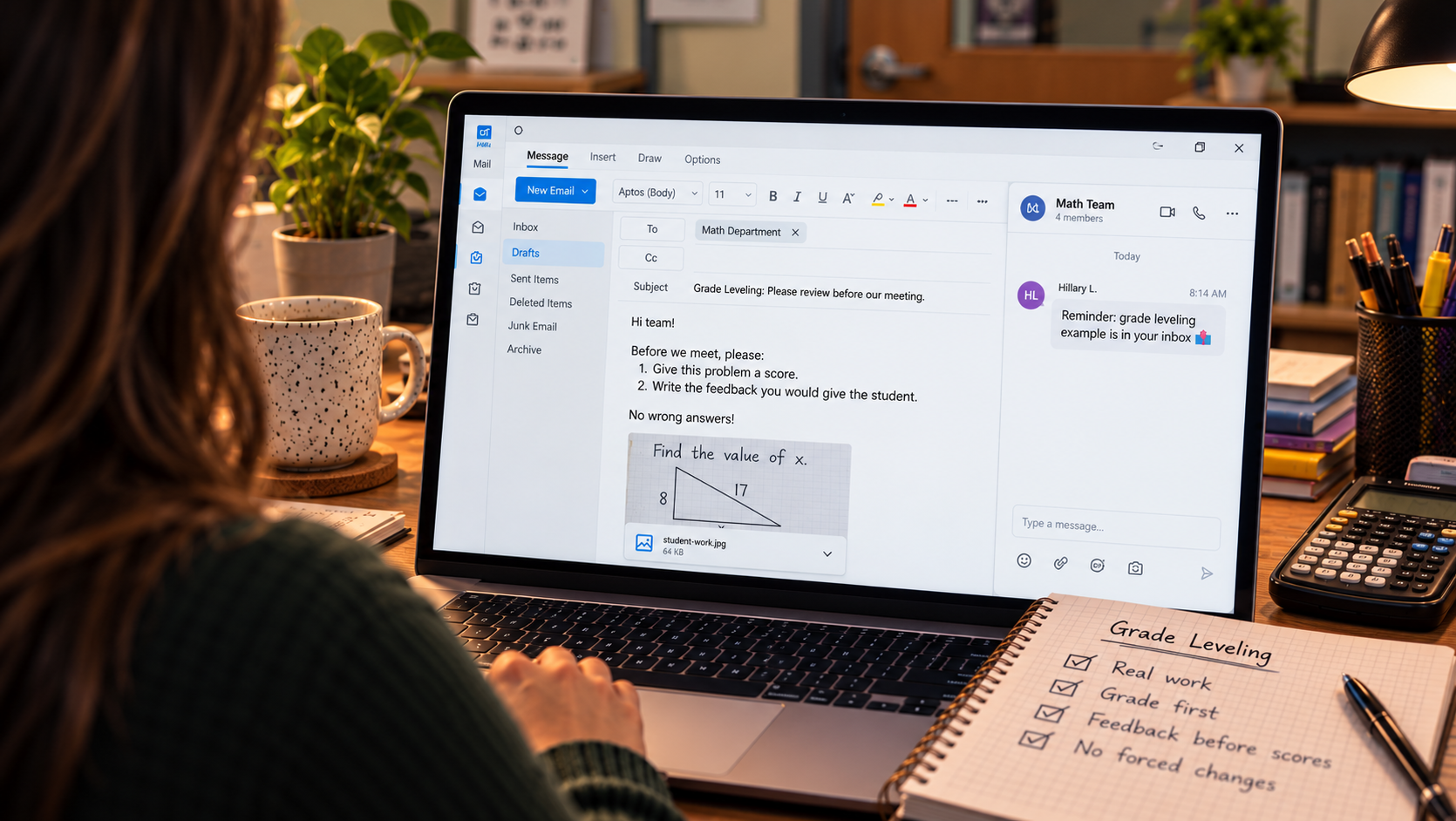
Grade independently first. I sent the examples ahead of each meeting so everyone could decide on a score and feedback on their own.
Feedback before scores. We aligned on what to tell the student before debating the points.
No forced changes. Anyone could adjust their score after the discussion and explain why, but no one had to.
Respect people’s time. If we had nothing to discuss, I canceled the meeting.
🔨The Build
The slow start. At first, teachers forgot to send examples, so I brought in some from my own grading. In the first session, no one wanted to share their score. So I went first. Most people agreed with me. It was a start, but I was waiting for a better example.
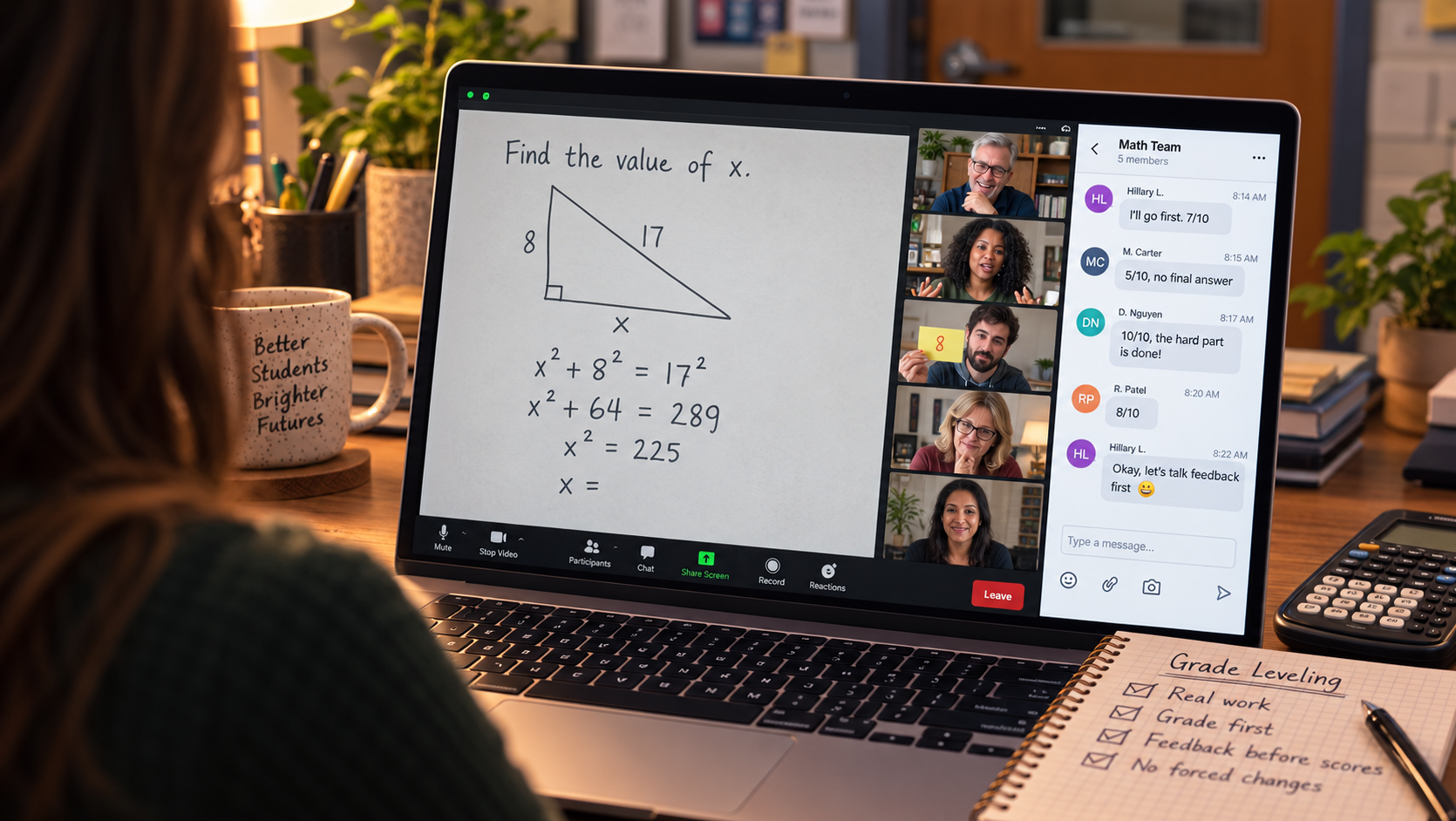
The breakthrough. It came soon after: a complex, 10-point geometry problem with an incomplete answer and a strong start. I sent it out early and reminded everyone in our group chat, because I knew it would spark discussion. It did. Scores ranged across 5 points. Some teachers were stricter, others more generous.
We worked on the feedback first, and most of the team agreed on it. Then we went back to the score. We didn’t reach full consensus, but most of the team landed within 2 points. More importantly, people were starting to see grading through each other’s eyes.
The momentum. Submissions started coming in, and some meetings had two examples to discuss. Some agreed quickly. Some were even further apart. We didn’t always agree, and I don’t think a healthy team should. Respectful disagreement showed we trusted each other.
🎯The Outcome
Grade leveling never produced a rubric or a policy. What it changed was harder to see on paper, but easy to see in how the team worked together:
Scores on complex problems moved from a 5-point spread to within about 2 points
Teachers began reaching out to each other when they weren’t sure about grading a longer problem
When grading concerns came up from students or families, I could review the work and stand behind the grade
School leadership recognized the math department as a team that functioned well and helped each other
The sessions continued for the rest of my time at the school
Mindsets don’t change on paper, and this was never meant to produce a document. It produced a team.
💡The Reflection
I’ve always led the way I want to be led. When a teacher brought me a problem, they told me what they had already tried. Then I either gave them the answer, found it and reported back, or took ownership of it and followed through. That trust didn’t happen by accident. It was strategic.
Grade leveling worked because that trust was already there, and it made the trust stronger. Teachers could disagree openly because they knew no one was being judged.
Part of me wishes I had heard this idea a year sooner. But that was my first year as a supervisor, and I’m not sure I would have had the same mindset, or that the team would have been ready. The first year built the trust. The second year put it to work. Sometimes the right idea needs the right moment.
I also learned that this kind of change takes time. Some examples came together in minutes, and others never fully did. That was okay. The goal was never identical grades. It was a team that understood each other’s thinking.