


Instructional Design
Most people think instructional design is about building training. It’s not. It’s about solving problems.
Training might be the solution. Or it might not. Before I touch a single tool or open a single authoring software, I want to understand what’s actually going on. What made someone decide this needed to be a training? What has already been tried? What does success actually look like six months from now, not just on launch day? Those questions matter more than anything I could build without them.
I show up to every project with questions. A lot of them. For a recent project I came to the kickoff meeting with nearly 50 typed out and ready. Not to ask them one by one, that would make a terrible meeting, but to make sure nothing important fell through the cracks. I used them as a map while the conversation unfolded, filling gaps as they appeared and letting the goals drive the discussion. I left that meeting knowing exactly what I needed to do to be successful. That’s what good instructional design feels like before anything gets built.
I also think about what happens after. Not just whether the course works on day one, but whether the system around it will hold up. For that same project I worked with the LMS administrator to build it clean and expandable, created templates for multiple tools so anyone could maintain it, built a shared process document between two departments, designed a survey that measures specific outcomes, and am already planning a dashboard to surface the data where it can actually be used. The training is one piece. The system that supports it is what makes it last.
There is a difference between an instructional designer and a course builder. I say that with respect because I spent years as a course builder and I learned everything from it. But they are genuinely different skill sets. A course builder executes. An instructional designer asks whether execution is even the right answer, and if it is, builds something designed to outlast the moment it was made for.

Instructional Design in Action
These projects show what instructional design looks like when it’s done with intention. Each one started with questions, not solutions. Select a project title to read the full story.

The QC program didn’t start with a checklist. It started with a question: what does quality actually require, and how do we know when we have it?
I did the work before I designed the solution. I completed QC reviews myself, tracked every finding, and used that data to build a standard that reflected reality rather than assumptions. The checklist was the output. The thinking behind it was the design.

Most instructional design projects have a clear target. This one moved. When the sponsor changed and the philosophy shifted, the training had to do more than update its content. It had to change what agents believed about their own role. That’s a different design problem. I worked with observation recordings, a tight timeline, and a clear sense of what the learners actually needed, and built something that could reach thousands of people fast. The format followed the problem. Not the other way around.

Webinars were great for deep learning, but sometimes taxpayers just need one clear answer, fast. Each video tackled a real question the call center heard often, using the same simple structure to stay under two minutes. A consistent intro, outro, and music made every episode feel familiar, and burned-in captions meant anyone could follow along, even without sound. Short, consistent, and accessible was the design. It worked because it met people at the exact moment they had a question.
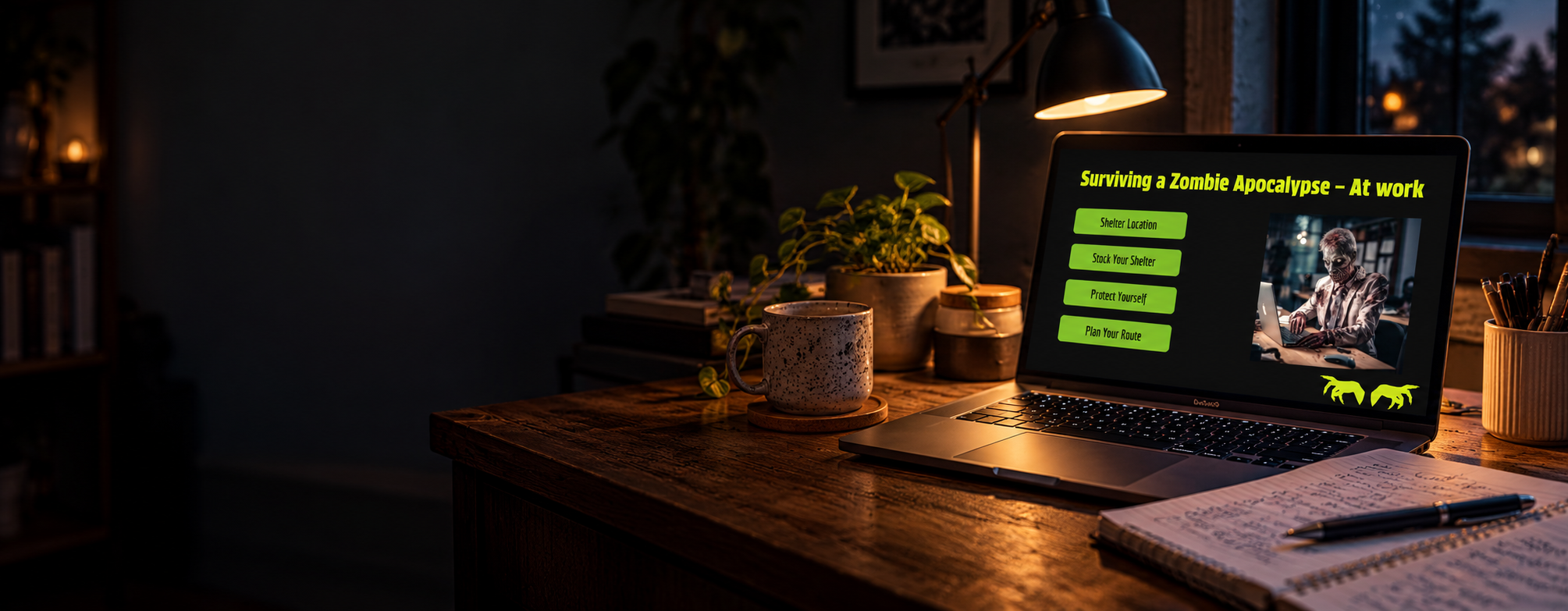
The challenge came with joke objectives, like zombie impersonation and rubber duck booby traps. Before building anything, I rewrote them into four measurable goals and matched each one to a purposeful interaction: an explorable office map, a $1,000 shopping cart, a workspace weapons hunt, and an escape route. Every wrong answer got its own short story explaining why it fails, and an open menu let learners start with whatever mattered most to them. The humor worked because the design underneath it was solid. It’s one project you don’t have to take my word for. You can take the course yourself.

Where This Is Headed
Instructional design will always be part of how I think. The questions I ask, the way I look at a problem before reaching for a solution, the instinct to build for the long term rather than the moment. Those don’t go away regardless of what my title says.
What I’m looking for next is space to bring that thinking to bigger challenges. Not just designing the learning experience but shaping the strategy behind it. Not just answering the request but helping decide whether the request was the right question in the first place.
The best instructional designers I know don’t just build things. They change how organizations think about learning. That’s where I want to go next.